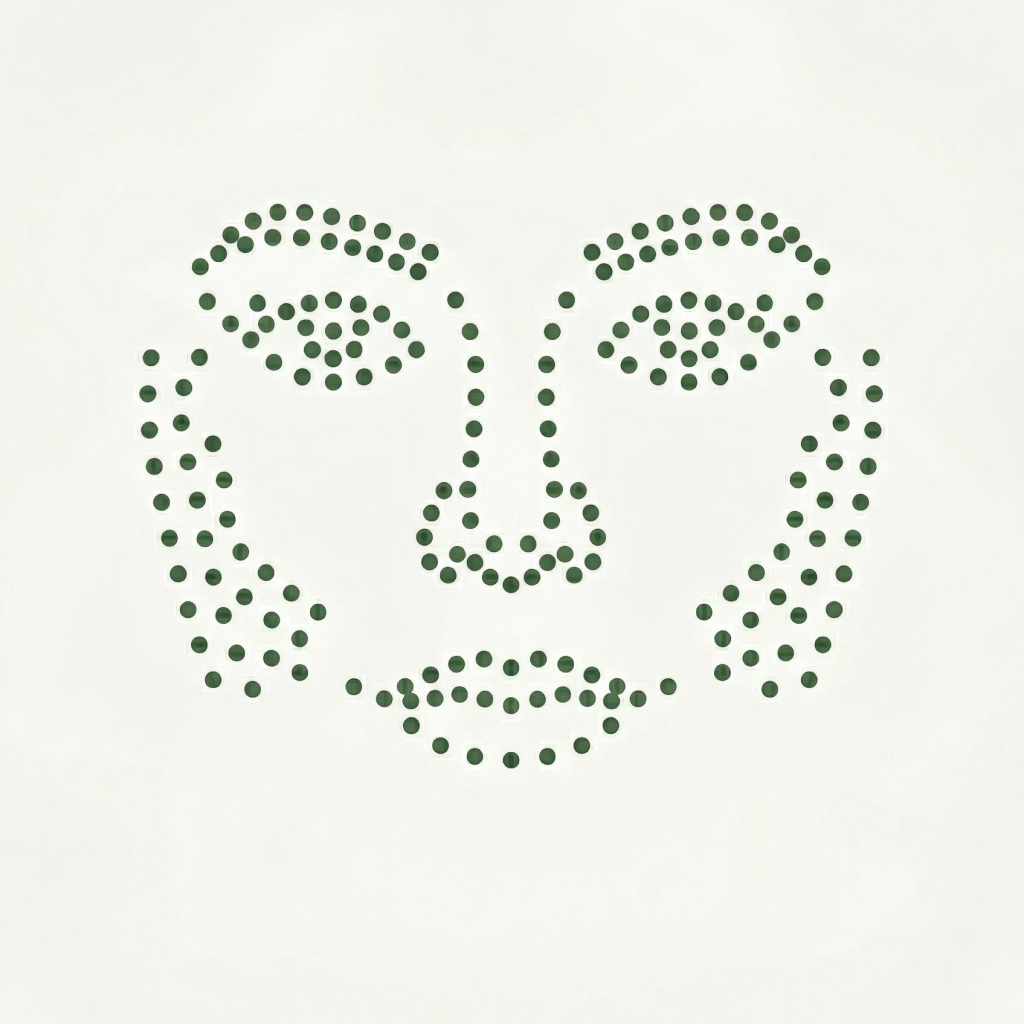
A ratio is descriptive, not a diagnosis. GLOWD compares each measurement with a configured reference center and shows its contribution to the Harmony Score. Camera angle and expression can change the measurement, so repeat scans are most useful when capture conditions stay similar.
- 01Middle third
- The distance from the brow line to the base of the nose, divided by estimated total face height.
- 02Eye separation
- The distance between the pupil centers, divided by cheekbone width. Eye-corner centers are used if iris points are unavailable.
- 03Facial index
- Estimated face height divided by cheekbone width, measured with pixel-corrected coordinates.
- 04Top third
- The distance from an estimated hairline point to the brow line, divided by estimated total face height.
- 05Lower third
- The distance from the base of the nose to the bottom of the chin, divided by estimated total face height.
- 06Eyebrow position
- The average vertical gap between each brow center and the top of its eye, divided by total face height.
- 07Jawline definition
- Jaw width at selected lower-face points divided by cheekbone width.
- 08Facial symmetry
- The average left-to-right deviation across paired eye, brow, nose, and mouth landmarks, normalized by face width. Lower deviation is more symmetric.
- 09Nose width
- The width between the outer sides of the nose divided by the distance between the inner eye corners.
- 10Mouth width
- The distance between the mouth corners divided by measured nose width.
- 11Chin-to-philtrum
- The vertical length from below the lower lip to the chin divided by the length from the nose base to the upper lip.